How to Measure ERP Success in a Foundry: 7 Metrics That Show Real ROI
 ERP ROI: 7 metrics

To measure ERP ROI in a foundry, record your numbers before go-live, then compare them at 3, 6 and 12 months on seven metrics: staff time, charge-mix cost, inventory turns, production efficiency, loss-making items, breakdown days and machine-integration savings. ROI = (annual benefit − annual ERP cost) ÷ annual ERP cost × 100.
- ROI formula
- (Annual benefit − Annual ERP cost) ÷ Annual ERP cost × 100
- Measure at
- Baseline, then 3, 6 and 12 months after go-live
- Biggest levers
- Charge mix, inventory turns, item-wise profit
Why is ERP ROI harder to measure than a machine's?
Buy a machine and the supplier installs it; the next day you can measure its output. ERP is different. It changes how people work, and habits are the hardest thing to change in any plant. That is why a foundry has to choose the right ERP and make sure it is actually used.
Yet every investment is judged on one question: how soon does it pay back? To answer it, add up the value of the benefits by comparing your foundry's numbers before and after implementation.
What should you measure before go-live?
Record a baseline for each metric below in the month before go-live. Without it, you will only have opinions later. Agree the KPIs with your vendor during implementation; a good vendor helps you build this benefits plan.
Which 7 metrics show the real benefits of a foundry ERP?
1. Staff time saved
Measure how long people took to record data and prepare reports before and after go-live, and value it at their salary cost. A streamlined system also lets you grow without adding operational staff.
2. Least-cost charge mix
Often the biggest saving. A charge-mix optimiser calculates the cheapest mix of the materials in stock to hit the target chemistry, using recovery percentages, and the additions needed after the running sample. With Meltix, customers have measured charge-cost savings of up to 4% for iron, 6% for aluminium and copper alloys and 8% for steel.
3. Inventory turns
Better planning reduces excess stock and frees capital. Value the released stock at your interest rate, such as your cash credit rate, and count it as a saving.
4. Production efficiency
Track individual and department KPIs. Fewer repeated entries and better planning reduce delays and raise output from the same team.
5. Loss-making and low-profit items
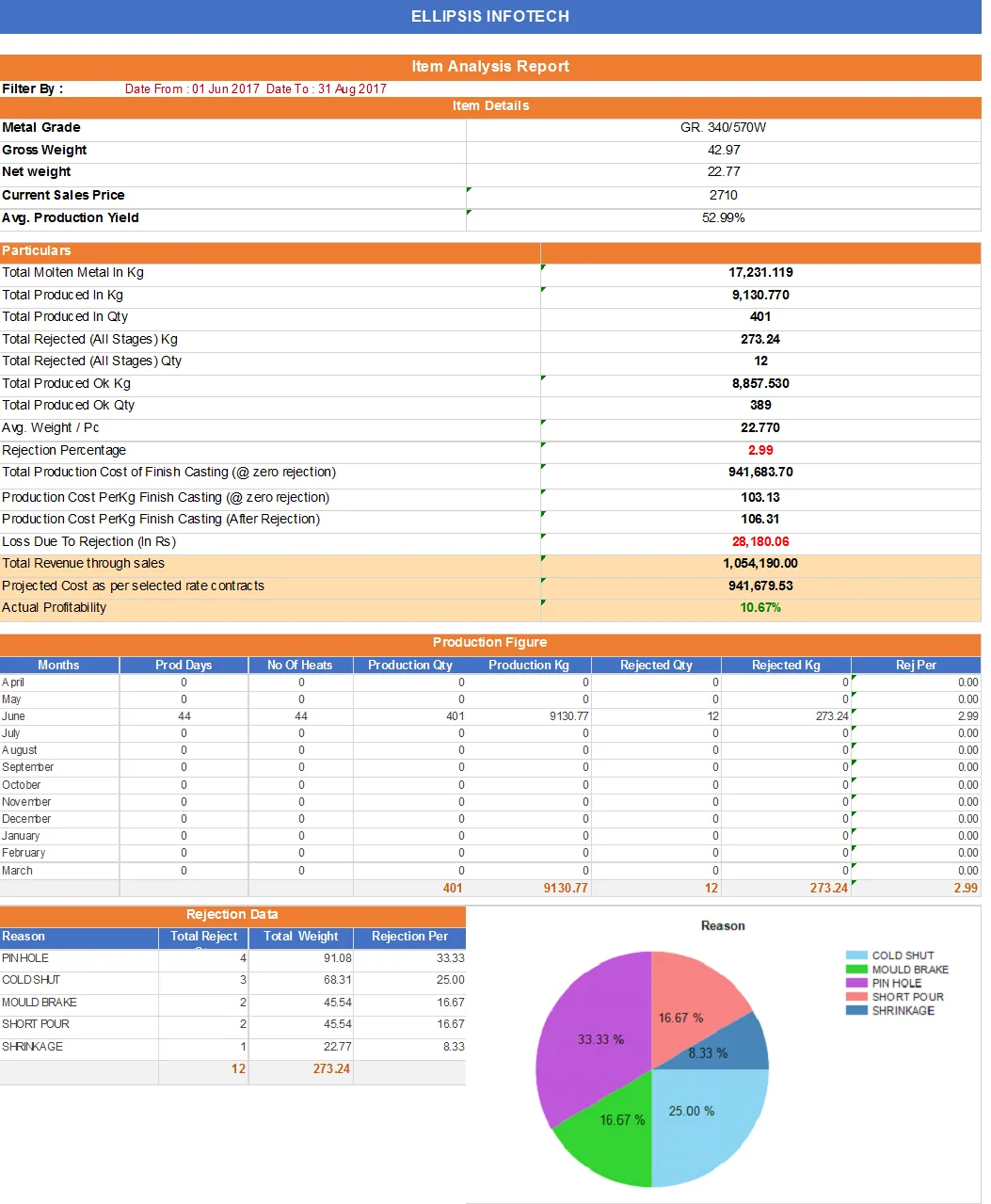
Foundries are jobbing businesses, so item profitability is hard to see. An item-wise costing and profitability report shows which castings lose money. Re-pricing or replacing the bottom 5% of items on that list can turn losses into profit with the same capacity.
6. Breakdown days avoided
Move maintenance from reactive to planned with equipment checklists, spares, machine history and MTTR and MTBF reports. Every production day saved from a breakdown is a day's profit saved.
7. Machine integration
Connecting the ERP to spectrometers, weighbridges and other equipment removes re-typing and waiting. Spectrometer readings that land on the heat record automatically mean faster corrections and fewer entry errors.
Foundry ERP ROI worksheet
| Metric | How to measure | Before | After |
|---|---|---|---|
| Staff time | Hours a month on entry and reports | ||
| Charge-mix cost | ₹ per tonne of charge | ||
| Inventory | Average stock value, days of stock | ||
| Production efficiency | Output per shift, delays per month | ||
| Item profitability | Number of loss-making items, margin on bottom 5% | ||
| Breakdowns | Production days lost per year | ||
| Machine integration | Manual entries per heat, entry errors |
Add up the yearly value of the improvements, subtract the yearly ERP cost, and apply the ROI formula. ROI usually grows with time; many foundries see the biggest returns in years three to five. For a quick estimate with your own numbers, use the savings calculator on our home page.
Which benefits are hard to put a number on?
- Real-time access to accurate data
- Departments working from one database
- Faster decisions from ready reports
- Better on-time delivery and supply chain control
- Better data security and compliance
- Faster, better-informed customer service
Still choosing a system? Start with our 15-point foundry ERP buying checklist.
Frequently asked questions
How do you calculate ERP ROI for a foundry?
Measure each metric before go-live and again after, value the improvements in rupees per year, subtract the yearly ERP cost, divide by the yearly ERP cost and multiply by 100.
When should a foundry measure ERP benefits?
Record a baseline in the month before go-live, then compare at 3, 6 and 12 months. ROI usually keeps growing for several years.
What gives the biggest ERP savings in a foundry?
Usually the least-cost charge mix, lower inventory and finding loss-making items. With Meltix, customers have measured charge-cost savings of up to 4% for iron, 6% for aluminium and copper alloys and 8% for steel.
Can I estimate ERP savings before buying?
Yes. Use the savings calculator on the ICAST home page with your own tonnage and costs, then confirm the estimate in a demo.